Company News / From EEG Insights to Treatment Response

2026.08.21

From EEG Insights to Treatment Response

From EEG Insights to Treatment Response

HippoScreen Neurotech continues to strengthen its connection with clinical and academic research, working alongside multidisciplinary teams to explore how EEG biomarkers and artificial intelligence can support more objective and personalized approaches to mental health care.

Recent clinical work led by Dr. Chun-Hung Chang and his clinical team incorporated HippoScreen’s SEA® AI-powered EEG analysis system as an adjunctive assessment tool in a patient with treatment-resistant depression receiving an integrated treatment combining esketamine nasal spray and accelerated intermittent theta-burst stimulation (iTBS). Following treatment, the SEA stress index decreased from 7 to 3, consistent with the observed improvement in clinical symptoms. The case was subsequently published in the international journal Frontiers in Psychiatry.

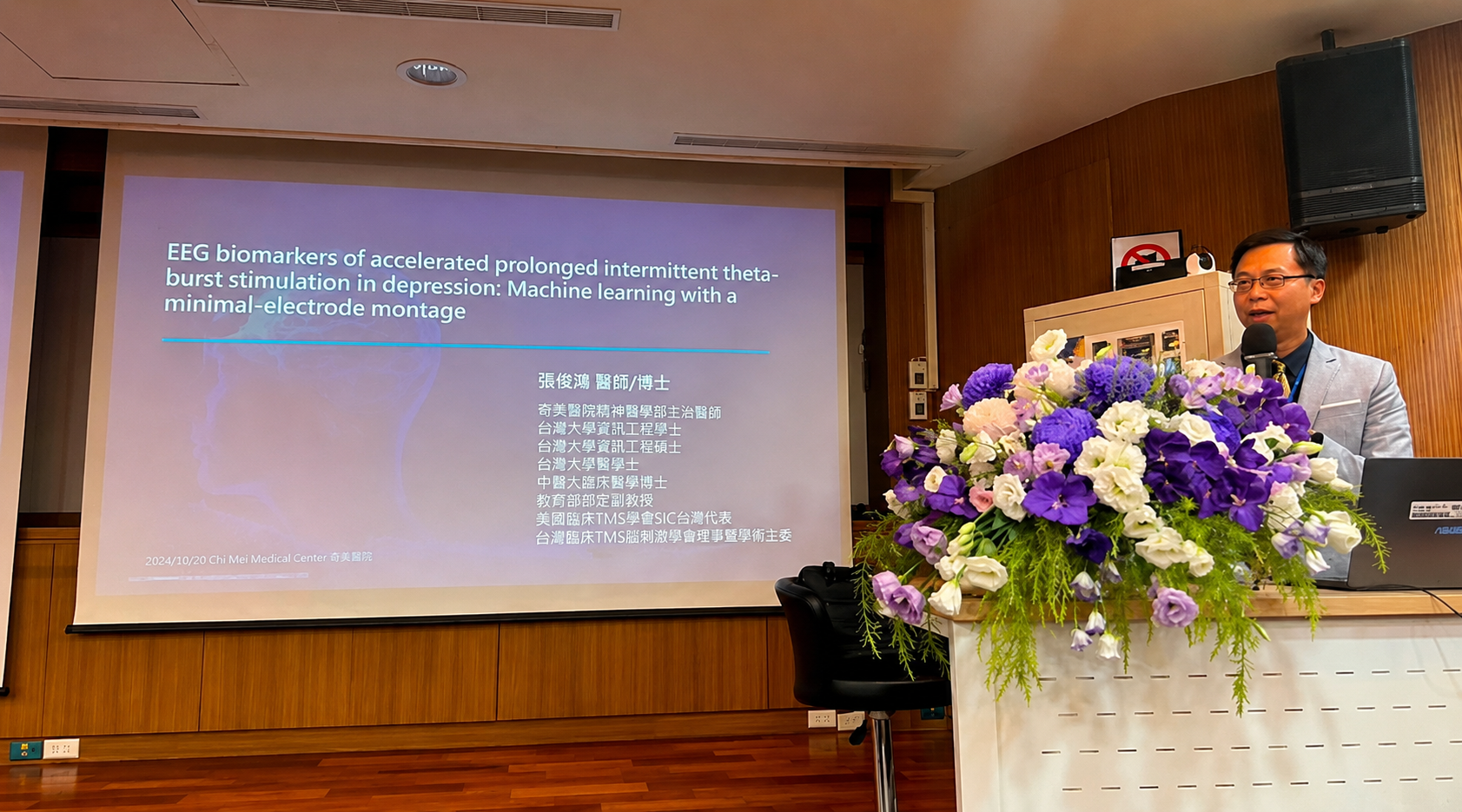
Beyond clinical assessment, HippoScreen has also been involved in collaborative research exploring the potential of EEG biomarkers and machine learning to assess treatment response to transcranial magnetic stimulation (TMS). Working across clinical and academic research groups in Taiwan and internationally, the research demonstrated that an AI-based approach using a reduced eight-electrode EEG montage could retain predictive performance comparable to a conventional 30-electrode configuration. The findings were published in Brain Stimulation and recognized with a Best Paper Award by the Taiwan Society of Psychophysiology.

These ongoing collaborations reflect HippoScreen’s commitment to bridging brain science, AI, and real-world clinical needs. By working closely with clinicians and research partners, HippoScreen aims to translate objective brain-based biomarkers into practical tools that can support clinical assessment and advance the development of precision mental health care.


Related Publications:

Chang C-H, Hsia Y-D, Liu W-C, Lin C-H, Ying J and Tsai H-C (2026) Case Report: Intranasal esketamine and accelerated intermittent theta-burst stimulation for severe treatment-resistant depression with suicidal ideation. Front. Psychiatry 17:1837402. doi: 10.3389/fpsyt.2026.1837402

Chang CH, Sack AT, Chu CS, Chang HA. EEG biomarkers of accelerated prolonged intermittent theta-burst stimulation in depression: Machine learning with a minimal-electrode montage. Brain Stimul. 2026 Jul-Aug;19(4):103135. doi: 10.1016/j.brs.2026.103135. Epub 2026 May 28. PMID: 42214786.